What Sweden could learn from the Netherlands' value-chain governance approach for the circular economy
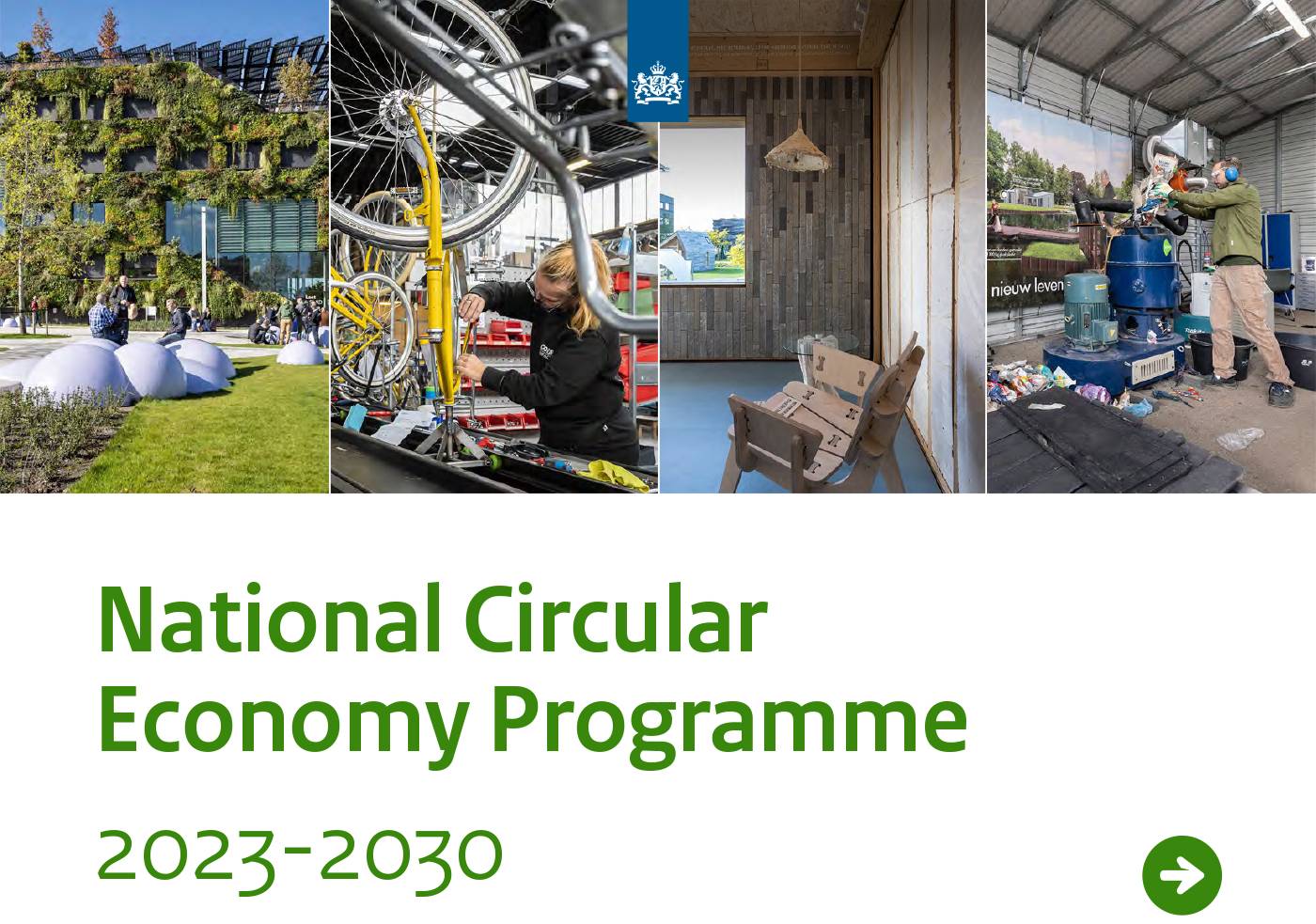
The Netherlands is often highlighted as one of the frontrunners in the transition to a circular economy, having ambitious goals and indicators for measuring progress.
This was one of the findings of the master's thesis Sweden towards a measurable circular economy, written for the Delegation for Circular Economy. Another aspect that stood out in the Dutch National Program for Circular Economy (NPCE) was its reshaping of their governance structure.
This new approach shares several similarities with the Delegation's Circular Keys (Cirkulära nycklar) project, which sparked our interest in learning more. In a conversation with Martijn Tak from the Programme Bureau for Circular Economy at the Dutch Ministry of Infrastructure and Water Management, we explored why the Netherlands is moving from transition teams to value-chain roundtables and what lessons other countries can draw from the experience.
Why change the governance model?
The Netherlands previously organised part of its circular economy work through transition teams.
"The transition teams were established in 2016. The teams were organized at a high level of abstraction, for example consumer goods, and not at the product group level (for example furniture). The product group level is what the National Program for Circular Economy of 2023 uses as the level for action perspective in value chains. The transition teams mainly consisted of the frontrunners, or people really into the circular economy, companies as well as scientists and representatives. They all believed that the circular economy is very important, working intensely on new business models. The transition teams had a very important role in the first phase of the transition, but we found that if we wanted to scale up, we had to find a way to involve more than only the frontrunners."
To address this challenge, the Netherlands introduced a new governance structure in 2025. This included a shift from the transition teams to so-called value-chain roundtables.
"We introduced this new system to bring together all relevant actors in the value chain, understand the opportunities and constraints, and identify where improvements are needed. We need everyone on the table to find the best solution for gaining the circular economy."
From transition teams to value-chain roundtables
The new model is built around roundtables for different product groups.
"We started with four roundtables; furniture, packaging, electronic equipment, and textiles. We're finding our way and starting with four tables to find out what works or what doesn't work and then try to scale up with more tables. The ambition is to bring together representatives from across the value chain. Also, it is important to have policy officers in the ministry responsible for the different product categories, since preparing takes time, just as organizing a possible follow-up."
There was already an established cooperation for the built environment, where existing roundtables were used to address both circularity and climate-related issues.
"It can be a benefit to combine circular economy related issues and climate change, but in general it's harder to really focus on circular economy if you have a broader agenda."
"We focus on finding representatives of all phases in the value chain. One problem is, that representative organisations represent, for instance, the industry as a whole (which contributes to a good discussion), but they don’t invest in innovations or new installations themselves. We try to find the right way of representing the whole product category on a table. In the best way, you would have the representative organisation and representatives of companies, but the disadvantage is that you will have a very big roundtable."
Not all value chains are treated the same way.
"The different product categories are at a different level of getting to the circular economy. For instance, we have a roundtable for packaging, where there’s a lot of European regulations on packaging and packaging waste. We also have a roundtable for furniture where there's a lot less European regulation. So, the possible outcome and objective for these roundtables can be very different. This means that each table is given a bit of freedom to find their own way on what to do and what to focus on in the coming years.”
Addressing shared and urgent challenges
Alongside the value-chain roundtables, the Netherlands has introduced thematic roundtables and sprint cases.
Thematic roundtables focus on issues that cut across multiple value chains.
"Many of the challenges are shared across value chains. Financing is, for instance, one of the most important themes. We lift it out, to have a thematic table on finance and a discussion with banks and other relevant stakeholders."
Sprint cases, meanwhile, are designed for urgent and specific issues.
"We had a lot of plastic recyclers in the Netherlands facing difficulties because of the low prices of virgin material. As we want to recycle plastics, the problem is that the recyclers don't have a good market yet and are going bankrupt. This is a problem we must solve quickly. In a sprint case we make a smaller group and then we focus on a specific problem and try to fix it. All tables teach us valuable lessons."
Three lessons learned so far
The model is still relatively new, but Martijn points out some important lessons.
One is the need for a shared understanding among participants from the start.
"Take your time in the beginning. Make sure everyone's at the table with the same idea. If you find out later on in the process that companies or governments had different goals at the beginning, then you will find out that in the end it takes a lot of time."
Another is the value of involving policymakers throughout the process.
"My advice would be to involve the policy makers in the whole process. If it’s necessary to implement new legislation, then it is very convenient to have policy officers on the table from the start."
And finally, the importance of a shared governance philosophy.
"We could have done better in generating a general view on a higher level. When is the transition best driven through regulation, or when by a more cooperation approach. This is reflected in how the roundtables operate. I think it would be helpful if you have one steering philosophy in place."
Kommentarer från delegationens ordförande, Mattias Philipsson
Jag tycker det är väldigt roligt att ett land som Nederländerna, som är erkänt framstående inom cirkulär ekonomi, oberoende av oss har valt ett liknande angreppssätt som delegationen har gjort med projektet cirkulära nycklar. Om vi ska åstadkomma en verklig omställning måste även aktörer som inte redan är engagerade i cirkulär ekonomi delta. Annars riskerar arbetet att sakna tillräcklig förankring. Här tycker jag att vi kommit långt, även om vi säkert kan bli ännu bättre på att involvera aktörer utanför de traditionella cirkulära branscherna, inklusive dem vars befintliga affärsmodeller utmanas av omställningen.
Genom att involvera representanter för de offentliga aktörer som faktiskt kan påverka regelverk och styrmedel redan i processen skapas en direkt koppling mellan näringslivets erfarenheter och det politiska genomförandet. Det skulle också skapa en naturlig väg för att föra resultaten vidare till dem som har möjlighet att omsätta dem i konkreta åtgärder.
Jag tycker också att deras tematiska rundabordssamtal och så kallade sprint cases är intressanta. Det förstnämnda ligger nära vårt arbete med att identifiera gemensamma systemhinder. Det senare kan vara en modell för att samla rätt aktörer kring särskilt angelägna problem som behöver lösas snabbt. Nederländerna har bland annat använt sprint cases för att hantera krisen inom plaståtervinningen. Parallellt har man beslutat att från den 1 januari 2027 kraftigt förstärka de ekonomiska incitamenten inom producentansvaret för användning av återvunnen plast. Det är ett intressant exempel på hur akuta problem kan mötas med konkreta styrmedel.
Länkar
The master's thesis Sweden towards a measurable circular economy
The Dutch National Program for Circular Economy (NPCE)
Text: Adina Ponzio